

Refrigeration & Cold Storage Solutions for Supermarkets: Efficient, Sustainable, and the Right System Selection
In supermarkets, refrigeration and cold storage systems play a critical role in product quality, energy consumption, operational continuity, and customer satisfaction.
A properly designed refrigeration infrastructure ensures food safety while significantly reducing operating costs in the long term.
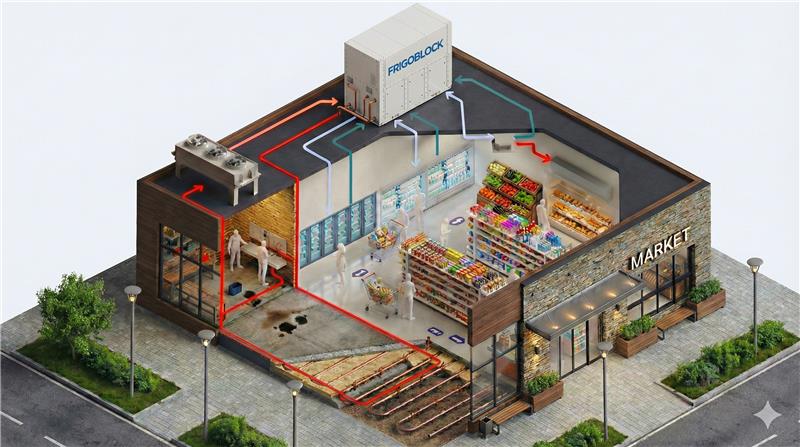
Key Requirements in Supermarket Refrigeration Systems
Refrigeration systems used in supermarkets typically cover the following application areas:
- Display refrigeration systems (open/closed cabinets, vertical display cases)
- Chiller and freezer room solutions
- Centralized refrigeration systems for storage areas
For each of these areas, proper capacity selection, appropriate system architecture, and energy-efficient equipment are of great importance.
What Should Be Considered When Selecting the Right Supermarket Refrigeration System?
1. Energy Efficiency and Operating Cost
Refrigeration systems account for a significant portion of a supermarket’s total energy consumption.
Systems with high COP values, inverter-driven compressors, and smart automation solutions can substantially reduce energy costs.
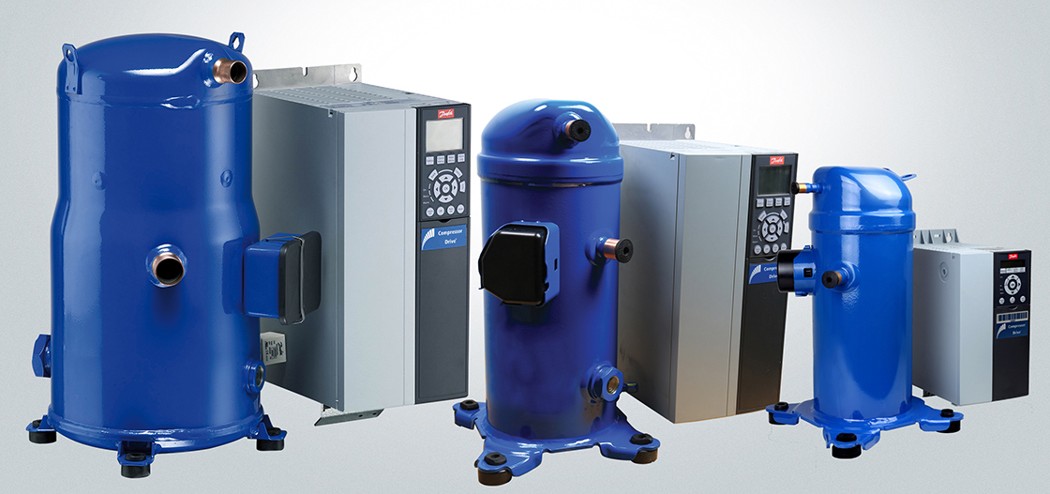
2. Proper Capacity and System Design
Systems selected with excessive or insufficient capacity may lead to:
- Unnecessary energy consumption
- Uneven temperature distribution
- Product losses
Therefore, project-based engineering calculations and accurate heat load analysis are of critical importance.
3. Redundancy and Operational Reliability
Failure of refrigeration systems in supermarkets can result in significant product losses. For this reason:
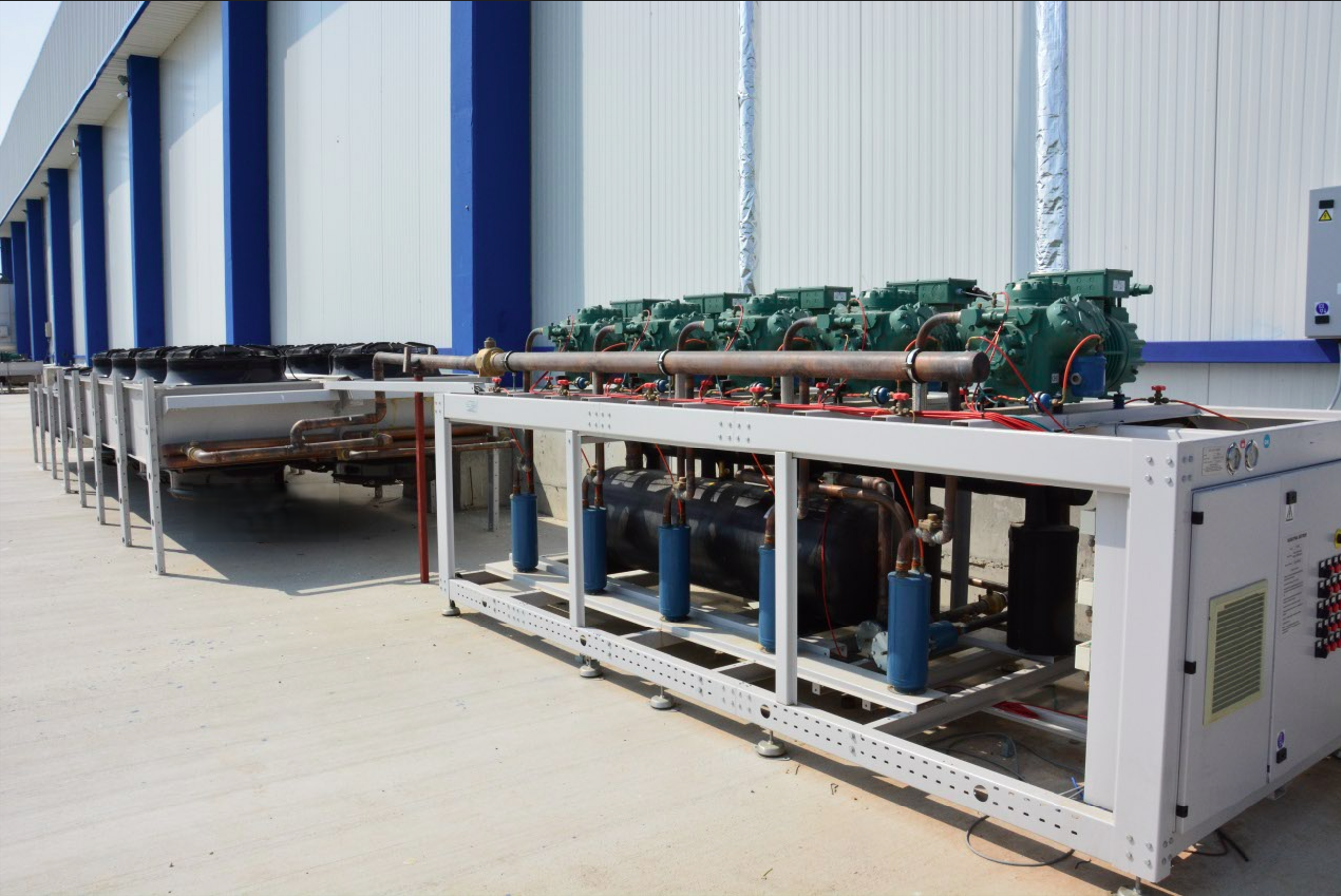
- Redundant compressor systems
- Alarm and remote monitoring infrastructures
- Ease of service and maintenance
should be prioritized.
4. Food Safety and Temperature Stability
To extend product shelf life and maintain quality, temperature fluctuations must be minimized.
Homogeneous air distribution and precision temperature control systems provide significant advantages.
Advantages of Natural Refrigerant Systems (CO₂ & R290)
In recent years, natural refrigerant systems have become increasingly preferred in supermarket projects.
- Low environmental impact (low GWP & ODP)
- Improved energy efficiency
- Long-term compliance with legal regulations
- Contribution to corporate sustainability goals
- Enhanced environmentally friendly brand perception
In particular, CO₂ (R744) and R290 (Propane)-based systems offer a strong alternative for supermarket applications in terms of both performance and sustainability.
Engineering-Driven Supermarket Solutions with Frigo Mekanik
Frigo Mekanik is a company that provides turnkey refrigeration and cold storage solutions for supermarkets, distinguished by its project-based engineering approach.
- Custom centralized refrigeration system design for supermarkets
- CO₂ and R290 natural refrigerant system solutions
- Energy-efficient compressor rack systems
- Project-specific heat load analysis and system optimization
- Automation, monitoring, and remote control infrastructures
- Long-lasting, low-maintenance, and sustainable system design
- Turnkey engineering, manufacturing, installation, and commissioning
Frigo Mekanik’s engineering approach goes beyond equipment supply;
it focuses on efficiency, return on investment and long-term performance targets.
The Right Refrigeration Solution for Supermarkets Creates a Competitive Advantage
A properly selected supermarket refrigeration and cold storage system:
- Enhances product quality
- Reduces energy costs
- Minimizes operational risks
- Supports environmental sustainability
- Provides long-term competitive advantage for the brand
Therefore, during the investment process, not only price but also engineering quality, energy efficiency, service infrastructure, and system lifespan should be evaluated together.
